File 06Season one
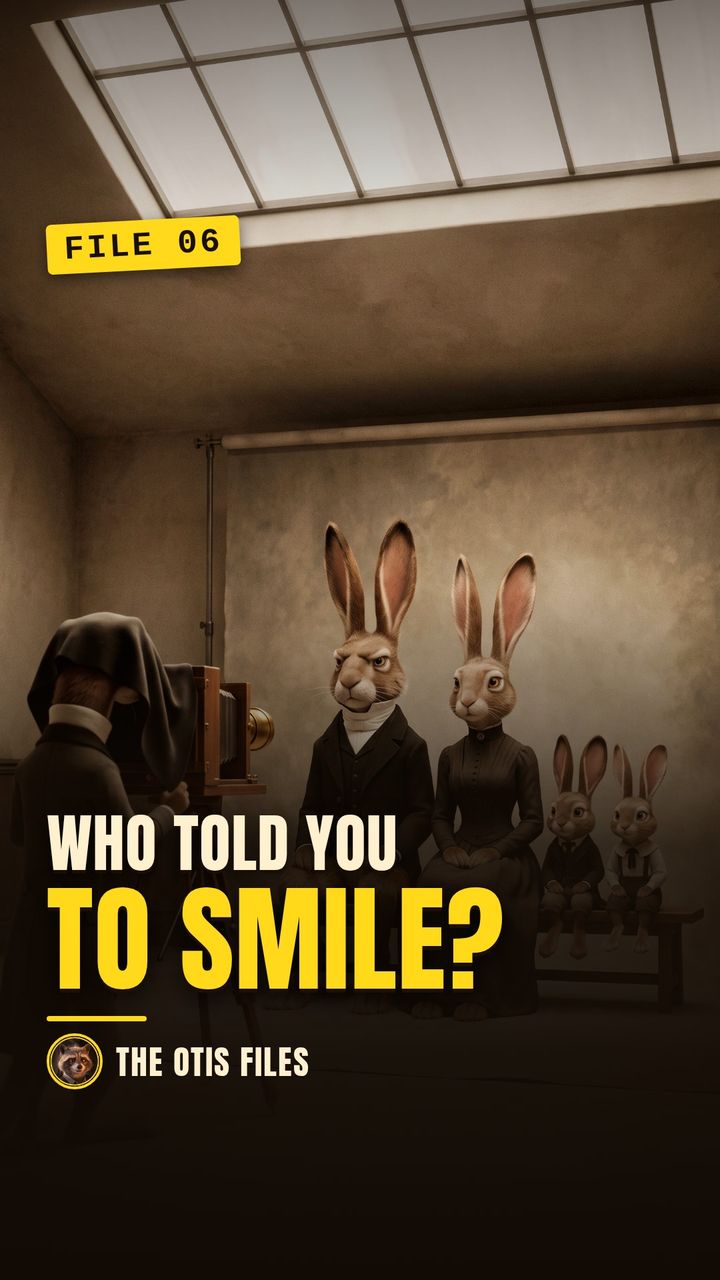
Who told you to smile for the camera?
Why nobody smiled in old photographs
The short answer
For decades, nobody did. In the 1840s a broad grin in a portrait was linked with drunkenness and foolishness, and one London studio told sitters to say "prunes" to keep the mouth small. The smile arrived with the snapshot camera. Kodak's adverts showed only happy moments, and by the 1940s people were being told to say "cheese".
- 1841
- London's first photo studio: "say prunes"
- 1888
- The Kodak camera goes on sale
- 1900
- The $1 Brownie: 100,000 in a year
- By the 1940s
- "Say cheese"
- Today
- About two trillion photos a year
When a grin meant trouble
In the fine arts a grin was only characteristic of peasants, drunkards, children and halfwits. That is how the scholar Christina Kotchemidova sums up the tradition the first photographers inherited. The Getty Museum puts it the same way: a broad grin was associated with lewdness, lunacy, drunkenness and the lower classes.
So the first photo studio in London, established in 1841, had its sitters say "prunes" to help them form a small mouth.
A camera for everybody
In 1888 the Kodak camera was placed on the market with the slogan "You press the button, we do the rest." In 1900 came the first Brownie, sold for one dollar. A hundred thousand were bought during the first year alone.
Kodak was not only selling a box. Kotchemidova writes that it aimed to preserve not just any important experiences but specifically happy ones. From 1893 the Kodak Girl was the company's primary sales icon for 80 years, and the message of consumer happiness radiated from her ever-present smile.
One man who would not
Not everybody went along. In Bermuda a tourist tried to snap Mark Twain with a Kodak. Elizabeth Wallace recalled in her 1913 book that he took on a serious, almost severe expression and said there was nothing more damning to go down to posterity than a silly, foolish smile caught and fixed forever.
Say cheese
By the 1940s the instruction had a word. A newspaper item from 1943 is reported to carry the advice: "Just say 'Cheese,' It's an automatic smile."
A study of 37,921 American yearbook portraits from 1905 to 2013 found a rapid increase in the popularity and intensity of smiles from the 1900s to the 1950s, a trend that still continues. Today the world takes about two trillion photos a year.
Otis saysSmile when you're happy. The cheese was sold to you.
The dates
- 1841The first photo studio in London adopts "say prunes" to keep mouths small.
- 1888Kodak: "You press the button, we do the rest."
- 1893The Kodak Girl appears, always smiling.
- 1900The first Brownie sells for one dollar.
- 1940sPeople are saying "cheese".
- TodayAbout two trillion photos a year.
What the record does not say
Things often repeated about this story that the sources do not support, and where our own film is careful.
- Kodak did not invent the smile. Kotchemidova notes that Kodak was no more original than other advertisers of its day. Its adverts spread the happy snapshot.
- "Say cheese" may be older than the 1940s. Other origins are claimed, so we say only that people were saying it by then.
- Long exposures are only part of the reason nobody smiled. They took minutes in the 1840s but a fraction of a second by the 1870s.
- The yearbook study shows a dip in smiles in the 1960s, so the rise was not steady in every decade.
Questions people ask
Why did nobody smile in old photographs?
In the 1840s a broad grin in a portrait was associated with drunkenness, foolishness and the lower classes, an idea carried over from painting. Long exposure times played a part early on, but they are only part of the answer.
Where does "say cheese" come from?
The phrase was in use by the 1940s. A 1943 newspaper item calls it an automatic smile. Other, earlier origins are claimed.
What did photographers say before "cheese"?
The first photo studio in London, established in 1841, used "say prunes" to help sitters form a small mouth.
Sources
- Christina Kotchemidova, "Why We Say 'Cheese': Producing the Smile in Snapshot Photography", Critical Studies in Media Communication 22(1), 2005.
- Getty Museum, "Say Prunes!", 2023. Read it
- Kodak, Milestones. Read it
- The Franklin Institute, Kodak Brownie Camera. Read it
- Elizabeth Wallace, Mark Twain and the Happy Island, 1913. Read it
- Nicholas Jeeves,"The Serious and the Smirk: The Smile in Portraiture", The Public Domain Review, 2013. Read it
- Ginosar et al., "A Century of Portraits", 2015. Read it
- Photutorial, Photo statistics 2026. Read it
- Today I Found Out, on the 1943 "say cheese" item. Read it
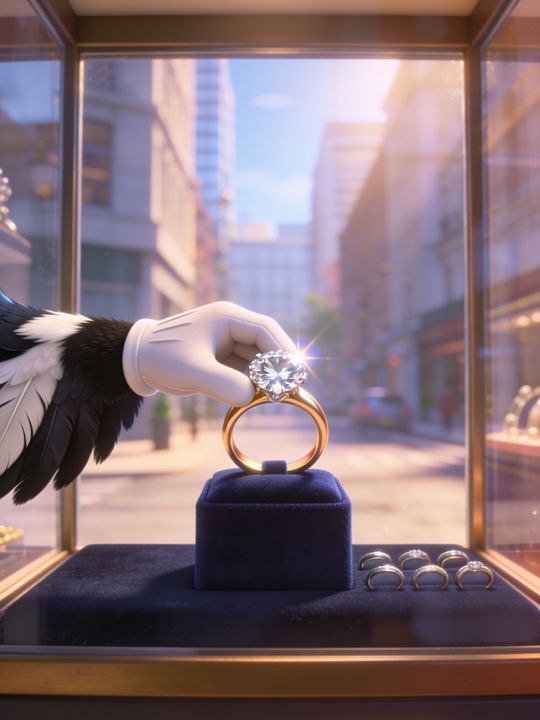
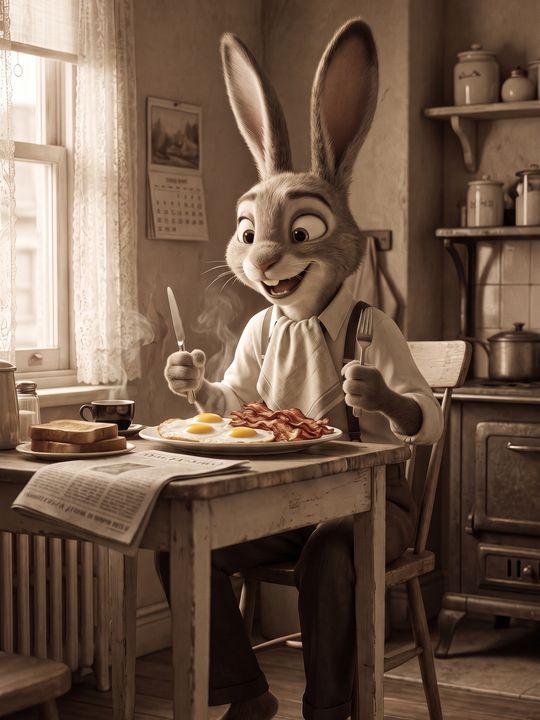
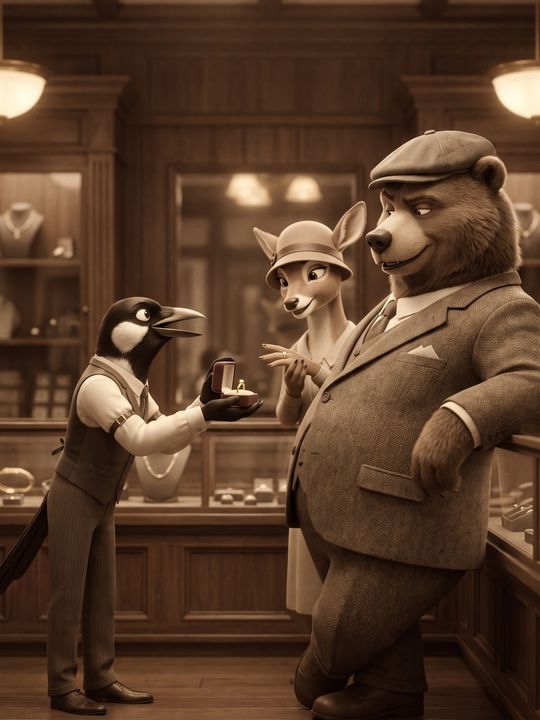
A dramatisation based on Christina Kotchemidova, "Why We Say 'Cheese'" (2005), the Getty Museum (2023), Kodak's own history and Elizabeth Wallace's Mark Twain and the Happy Island (1913). Twain's line is his recorded words, read by an actor. Every character is an animal; no real person is shown.
Think we have a fact wrong? Write to [email protected] with what you have found. We check every message and we correct mistakes.