File 02Season one
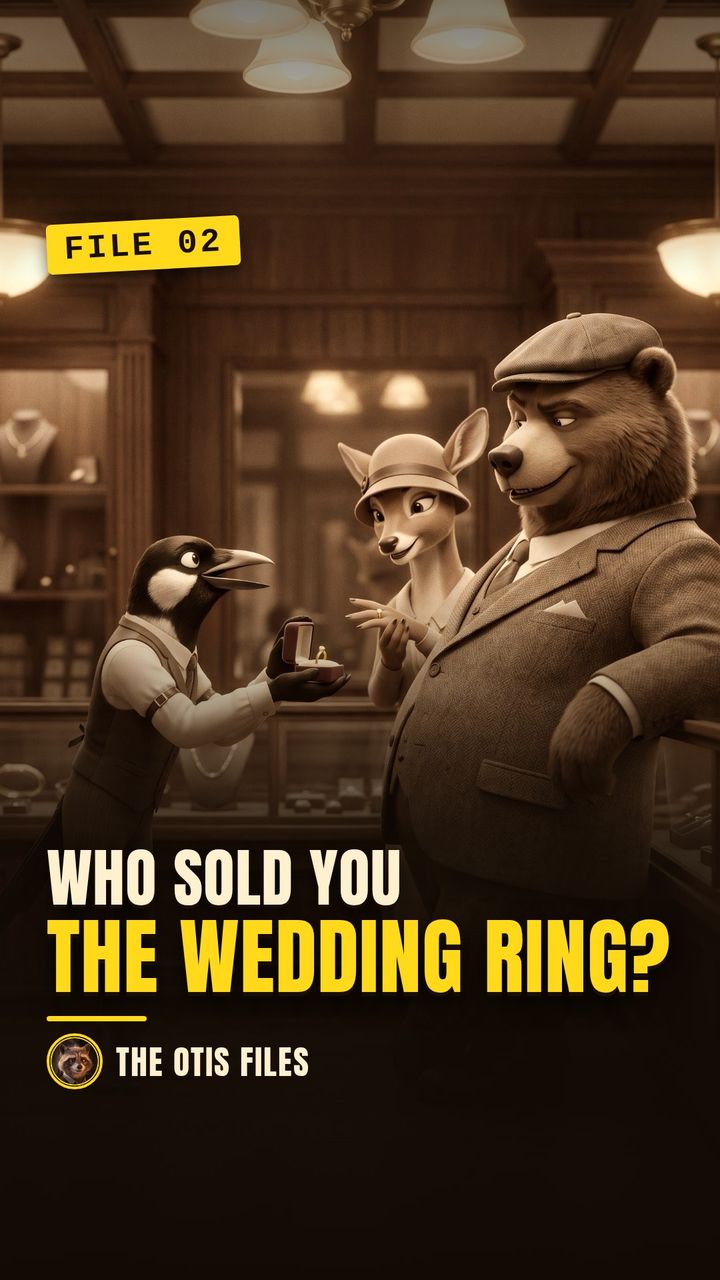
Who sold you the wedding ring?
Why men started wearing one
The short answer
American jewelers did, and it took them about twenty years. In 1926 the trade launched a big campaign for men's engagement rings, and it never caught on. In the Second World War it tried again with the groom's wedding band, sold as a soldier's link to the person waiting at home. From the end of the Depression to the late 1940s, weddings with two rings went from 15 in 100 to about 80.
- Where
- The United States
- First try
- 1926, an engagement ring for men
- What worked
- The two-ring wedding, promoted in wartime
- The number
- Two-ring weddings: 15 in 100, then about 80
- Main source
- Vicki Howard, Journal of Social History, 2003
1926: a ring for the man
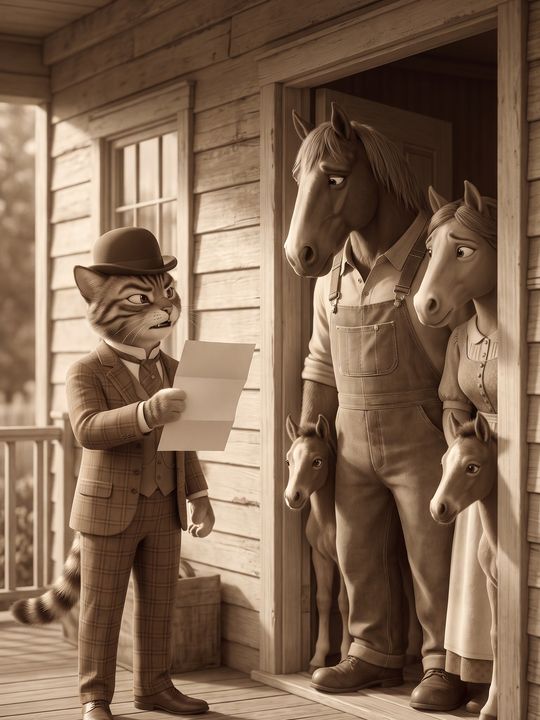
In the 1920s a ring on a man's hand looked odd in America. Fortune magazine, looking back in 1947, called it a time when it was considered odd in the United States for males to wear wedding rings. Double-ring ceremonies were not unknown, but they were uncommon.
In 1926 manufacturers and retail jewelers launched a major campaign to change that with an engagement ring for men. There were radio and newspaper adverts and window displays. It never caught on.
The chance that came with the war
The idea did not go away. The historian Vicki Howard quotes a trade account of a man at the country's largest wedding-ring maker, who had thought about popularising the double-ring ceremony before the war. His chance, the account says, came when brides and grooms facing wartime separation were "emotionally susceptible".
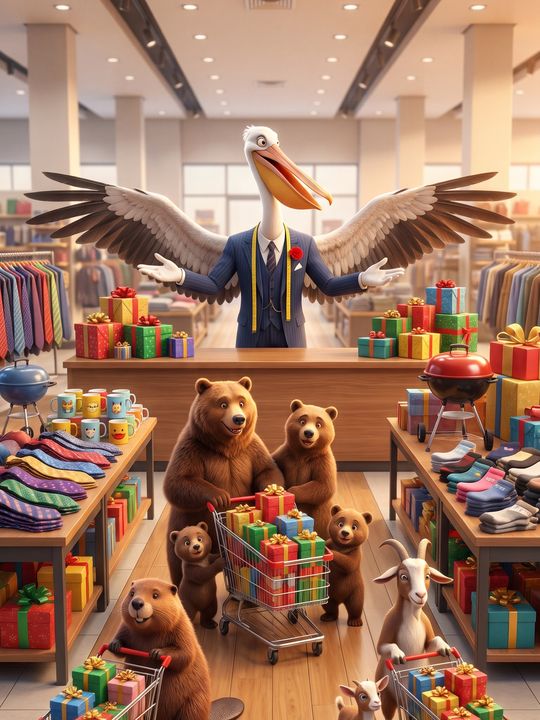
The jewelry trade's publicity board then told "the story of the double ring service" through radio, trade publications, movies and newsreels, and the publicity reached schools, clubs and factories. The pitch was simple. A groom's band was a symbol of what a man was fighting to preserve, and a link to his wife back home.
From 15 in 100 to about 80
It worked. From the end of the Depression to the late 1940s, the share of weddings that used two rings and not one rose from 15 percent to about 80 percent. The figure comes from a Fortune article of 1947, as cited by Howard.
What was sold, and what was real
Howard does not argue that jewelers tricked anybody. Her point is that the trade could only change the custom when the idea fitted what people already felt, and that marketing alone could not have done it. Couples facing separation wanted something to hold on to. The ring was there to be bought.
Otis saysYour love is real. The ring was sold to you.
The dates
- 1926Manufacturers and retail jewelers launch a major campaign for men's engagement rings. It never catches on.
- WartimeThe jewelry trade promotes the double-ring ceremony on radio, in newsreels and in schools.
- 1947Fortune reports that two-ring weddings have gone from 15 percent to about 80 percent.
What the record does not say
Things often repeated about this story that the sources do not support, and where our own film is careful.
- Some men did wear wedding rings before the war. It was uncommon, not unheard of.
- The 80 percent counts weddings, not men. It is the share of ceremonies with two rings, and both sources we read trace it to one Fortune article from 1947.
- The 1926 campaign was for a men's engagement ring, not for the wedding band.
Questions people ask
When did men start wearing wedding rings?
In the United States the men's wedding band became common during and just after the Second World War. Two-ring weddings went from 15 percent at the end of the Depression to about 80 percent by the late 1940s.
Did men wear wedding rings before World War II?
Some did, but it was uncommon. Fortune magazine in 1947 described the earlier period as a time when it was considered odd in the United States for males to wear wedding rings.
Was there ever an engagement ring for men?
Jewelers tried to sell one in 1926 with a major campaign of radio and newspaper adverts and window displays. It never caught on.
Sources
- Vicki Howard, "A 'Real Man's Ring': Gender and the Invention of Tradition", Journal of Social History 36(4), 2003. Read it
- Livia Gershon, "Selling the Men's Wedding Ring", JSTOR Daily, 2017. Read it
- Samantha Zabell, "The Rise of the Man-gagement Ring", The Atlantic, 2014.
- Fortune, "Ring Twice", November 1947, as cited by Howard.
A dramatisation based on Vicki Howard's research and Fortune magazine's "Ring Twice" (1947) as cited there. Every character is an animal; no real person is shown.
Think we have a fact wrong? Write to [email protected] with what you have found. We check every message and we correct mistakes.