File 07Season one
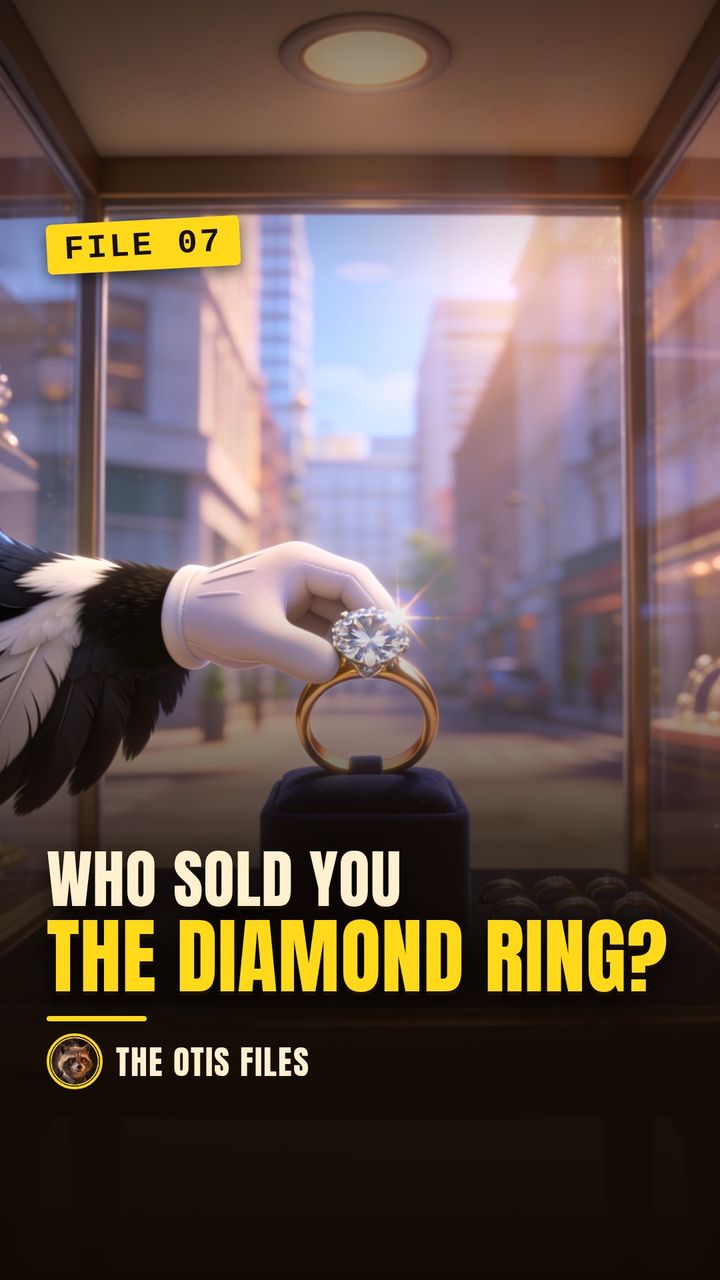
Who sold you the diamond ring?
Who taught us a bigger stone means a bigger love
The short answer
People bought diamond rings before, but the idea that a bigger stone means a bigger love was taught, by a diamond company and its advertising agency. In 1938 diamond prices were sinking and De Beers turned to the American agency N. W. Ayer. The agency put diamonds on movie stars, fed newspapers stories about the size of the stars' stones, and sent lecturers into high schools. US wholesale diamond sales went from $23 million in 1939 to more than $2.1 billion by 1979.
- 1938
- Diamond prices are sinking; De Beers meets N. W. Ayer
- 1946
- A weekly service on stars' diamonds reaches 125 newspapers
- 1947
- Ayer's plan: make the ring "a psychological necessity"
- Sales, US wholesale
- $23 million in 1939, over $2.1 billion by 1979
- Main source
- Edward Jay Epstein, The Atlantic, 1982
1938: prices are sinking
America was entering a depression and diamond prices were sinking. In September 1938 Harry Oppenheimer travelled to meet the president of N. W. Ayer, a leading advertising agency in the United States, based in Philadelphia. De Beers became its client, and the contract is dated 1939.
Stars first
The plan started with the cinema. Movie idols, Edward Jay Epstein writes, "would be given diamonds to use as their symbols of indestructible love". The agency arranged for film stars and other celebrities to wear diamonds in films and at gala events.
Then the newspapers. Stories would stress the size of the diamonds that celebrities gave to the people they loved. In 1946 the agency organised a weekly service called "Hollywood Personalities", which sent 125 leading newspapers descriptions of the diamonds worn by movie stars.
Into the schools
The quietest part of the campaign was aimed at teenagers. The agency arranged for lecturers to visit high schools across the country. A report quoted by Epstein said the lectures all revolved around the diamond engagement ring and were reaching thousands of girls in their assemblies, classes and informal meetings.
The lecturer in our film speaks one line: the bigger the diamond, the bigger the love. Those are not anybody's recorded words. We wrote the line to carry the message the campaign was built on, which Epstein sums up as the idea that the larger and finer the diamond, the greater the expression of love.
A psychological necessity
Ayer's strategy plan of 1947 put the aim in plain words: "We are dealing with a problem in mass psychology. We seek to ... strengthen the tradition of the diamond engagement ring" and "to make it a psychological necessity".
By 1979, Epstein reports, De Beers' sales of diamonds in the United States had grown to more than $2.1 billion at the wholesale level, compared with $23 million in 1939. The figures are not adjusted for inflation.
Otis saysThe love is hers. The size was sold to you.
The dates
- 1938Diamond prices are sinking. De Beers approaches the advertising agency N. W. Ayer.
- 1939The contract begins. US wholesale diamond sales stand at $23 million.
- 1946The "Hollywood Personalities" service sends 125 newspapers descriptions of movie stars' diamonds.
- 1947Ayer's plan sets out to make the diamond engagement ring "a psychological necessity".
- 1979US wholesale diamond sales pass $2.1 billion.
What the record does not say
Things often repeated about this story that the sources do not support, and where our own film is careful.
- De Beers did not invent the engagement ring. Americans were buying diamond rings in the 1920s. The campaign taught what the stone should mean and made the ring close to universal.
- The lecturer's line in the film is invented. It states the campaign's message and is not a quotation.
- The sales figures are wholesale, for the United States, from one source, and not adjusted for inflation.
- We leave out the "two months' salary" rule. The sources we read do not support it for the 1930s or 1940s.
Questions people ask
Why are engagement rings diamonds?
Diamond rings existed before, but from 1939 De Beers and its agency N. W. Ayer ran campaigns in the United States that built the modern engagement ring tradition, using film stars, newspaper stories and lectures in schools.
Who was N. W. Ayer?
N. W. Ayer was a Philadelphia advertising agency, one of the leading agencies in the United States. De Beers became its client after a meeting in September 1938.
How much did diamond sales grow after the campaign?
According to Edward Jay Epstein, De Beers' diamond sales in the United States went from $23 million in 1939 to more than $2.1 billion in 1979, at the wholesale level and not adjusted for inflation.
Sources
- Edward Jay Epstein, "Have You Ever Tried to Sell a Diamond?", The Atlantic, February 1982. Read it
- Jennifer L. Pequignot, "Creating an Engaging Tradition: N.W. Ayer & Son and De Beers' Advertising Campaigns in the United States from 1939 to 1952", MA thesis, Miami University, 2010. Read it
- American RadioWorks, "With This Ring: The Diamond Mystique". Read it
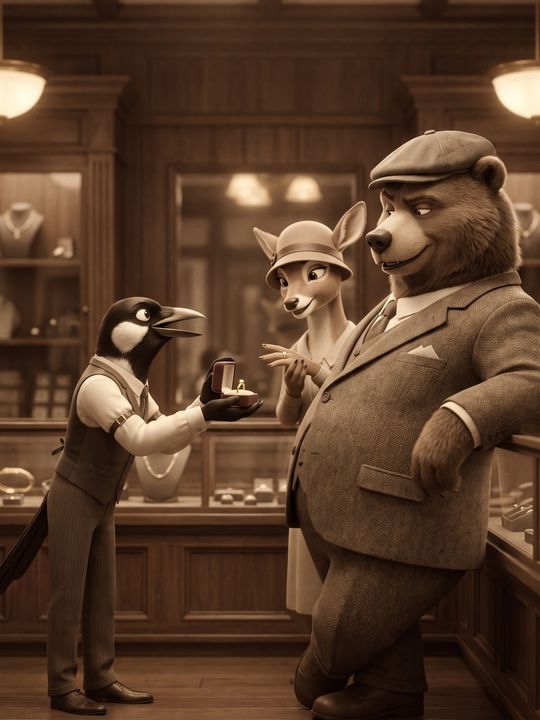
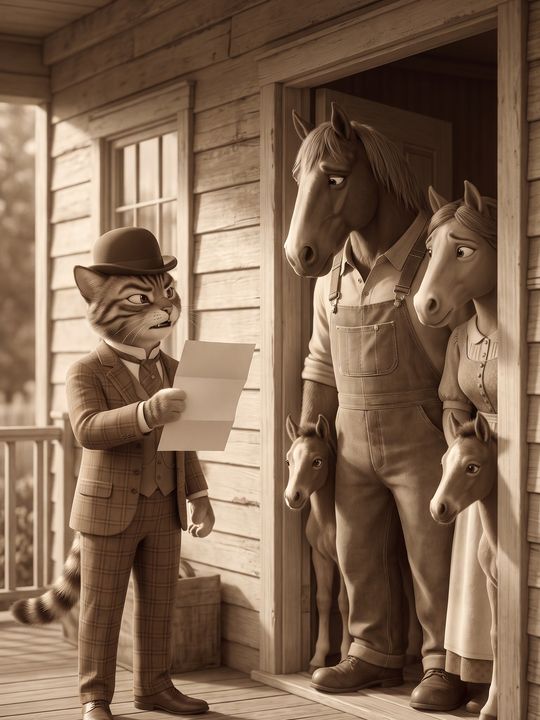
A dramatisation based on Edward Jay Epstein's "Have You Ever Tried to Sell a Diamond?" (The Atlantic, 1982), Jennifer L. Pequignot's history of the N. W. Ayer and De Beers campaigns (Miami University, 2010) and American RadioWorks' "With This Ring". The lecturer's line is invented to show the campaign's message. Every character is an animal; no real person is shown.
Think we have a fact wrong? Write to [email protected] with what you have found. We check every message and we correct mistakes.